I’ve encountered a problem when installing Windows Server 2008 R2 SP1 today and found the reason and solution pretty easy. It was due to Veeam B&R v5.0 automatically Disabled automount for SAN mode and W2K8 R2 SP1 requires automount to be enabled.
Solution:
1. Disconnect all active iSCSI connections and REMOVE the Target Portal from iSCSI favourite tab.
2. From command prompt, issue the followings:
> diskpart
> automount enable
3. Reboot the server then go ahead and upgrade your W2K8 R2 with SP1, it will take about 50 minutes to complete, yes, it did take that long even on latest powerful server.
4. Then issue the following AFTER reboot:
> diskpart
> automount disable
5. Reboot the last time and then re-establish all previous iSCSI connections as usual.
規則1:跟人決定前途
民初名妓小鳳仙,要是找個民工,掃黃就被掃走了;
她找蔡鍔,就流芳千古;
要是跟孫中山,那就是國母。
所以不在于你干什么,而在于你跟誰干。
規則2:時間決定性質
趙四小姐16歲去大帥府,去1年,是奸情;
去3年,是偷情; 一去30年,那就是千古愛情。
很多事情不是不做,而是要看做多久。
規則3:關鍵崗位要有自己人
男子去提親,女方家長:請自我介紹。
A說:我有1000万;
B說:我有一棟豪宅,价值2000万;
家長很滿意。就問C,你家有什么?
C答:我什么都沒有,只有一個孩子,在你女儿肚子里。
AB無語,走了。
這個案例告訴我們一個淺顯的道理,
核心競爭力不是錢和房子,是在關鍵的崗位有自已的人。
規則4:做人要有屏功
女秘書神色凝重地說:王總,我怀孕了。
王繼續低頭看文件,然后淡淡一笑:我早結扎了。
女秘書楞了一會媚笑道:我是和您開玩笑呢!
王抬起頭看了她一眼,喝了口茶說:我也是。
這個案例告訴我們, 在江湖上晃的人,遇事不要慌,先讓子彈飛一會!
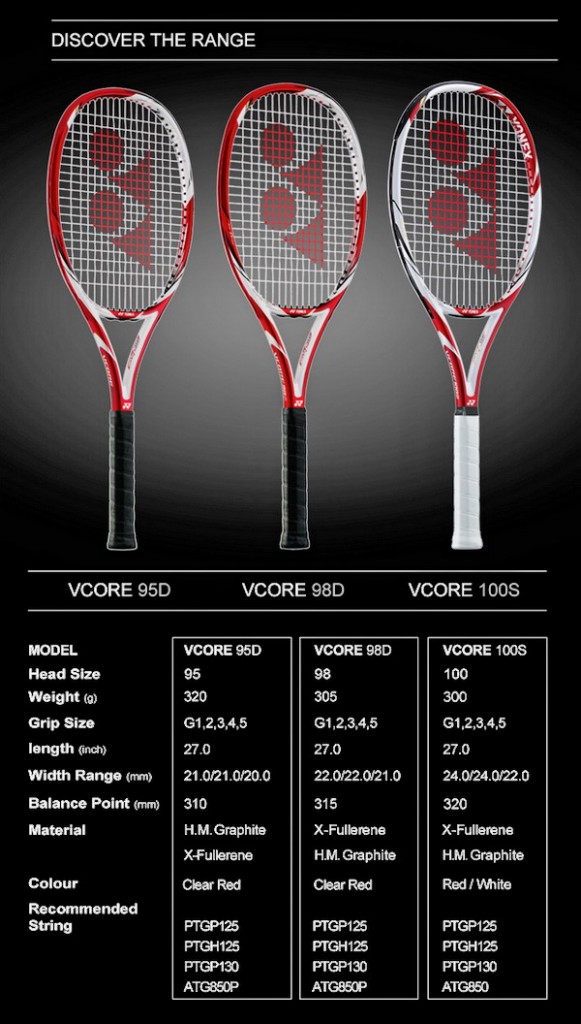
Today I finally got a chance to hit with the latest racket from Yonex, VCore 100 S, S specifies for Spin. It’s also the choice from current world #1 Caroline Wozniacki who just switched from Babolat recently.
I found indeed I can hit much better quality top spin with confidence ever than before, thanks to VCore’s technology “Spin to win with 3D Control”.
In fact, there isn’t much to compare with my 25 years old POG, I must admit the technology is definitely there this time and it did help me to improve my baseline style game, not to mention VCore 100 S also helped me to serve with more spin and angle, it’s simply amazing and I start to love it!
I am pretty sure now this is the one to go when it’s available in local store later.
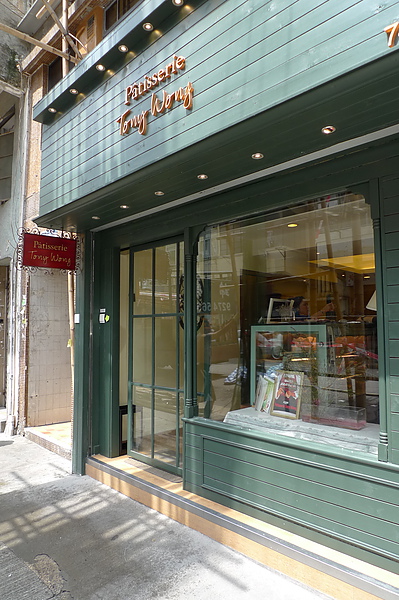
一間小的幾乎讓人忽略的小店竟然充滿了驚人的法式甜品浪漫﹐有機會你一定要試試看。
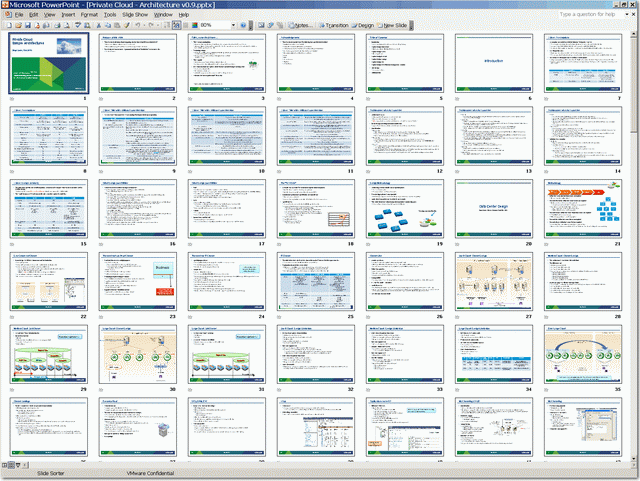
I just came across this GREAT PowerPoint presentation today, I wish I had it 6 months ago, it really helps you to clear the sky and understand many things before making the design and purchase decision.
At first, I got very poor performance when I was trying to svMotion a 20GB VM within the same Equallogic SAN between different volumes, it took over 20 minutes to complete, I thought there must be something wrong as I’ve already enabled VAAI.
After searching the net and discovered the problem is due to Different Block Size between the two volumes (1MB vs 2MB) that will actually disabled VAAI feature. 
So choosing the volumes with the same block size, I was able to reduce the time by almost 10 times!!!
See attached graph, 15:22 to 15:42 is the one without VAAI, 15:50 to 15:52 is the one with VAAI.

In additional, I have implemented Storage I/O Control today and found Storage vMotion with VAAI isn’t affected by SIOC as the whole svMotion is offloaded on to the EQL array, so SIOC won’t really kick in, you may say svMotion with VAAI is “Out of Control ”, this is another great thing about VAAI!
Finally, I do think SIOC is one of the best feature in ESX 4.1 for many cloud hosting providers as they can finally meet their storage SLA now besides the CPU and memory.
It’s nice to have this compliment plug-in for your Equallogic and VMware vCenter.
Btw, I am also getting the Dell Management Plug-in for VMware very soon from my Dell account manager, can’t wait to try it!
Got this information from DellTechCenter:
Beginning in March 2011, Dell will launch the next generation of OptiPlex desktops. OptiPlex delivers business-class control with industry leading security, manageability and services. These systems are designed to integrate seamlessly into any office environment and provide business-class control with industry leading security, manageability and services. They will have a common ID design across our entry, mainstream and performance business segments for consistent look with the 2nd generation of Intel’s Core processors.
The new OptiPlex 990 w/Intel Q67 iCore CPU aims at delivering best-in-class productivity and business-class control. The new mainstream OptiPlex 790 w/Intel Q65 iCore CPU delivers strong Office productivity with flexible remote control. OptiPlex 390—Affordable, latest technology iCore OptiPlex packaged in our newest chassis design.
•Available in DT, MT and SFF form factors
•200W up to 265W Power Supply options
•i3-2100 up to i7-2600 CPU options
•USB3.0 ports
The following is from Delltechcenter’s forum, posted by Joe from Dell EQL regarding the confusions about Equallogic’s load balancing between pools with multiple array members.
The following best practices should be considered for storage pools:
1. Do not mix arrays with different drive speeds RPM within a single pool unless they are running a unique RAID policy
2. Do not mix arrays with different drive technologies (SATA, SAS, SSD) within a single pool unless they are running a unique RAID policy.
3. Do not mix arrays with different controller speeds (1GbE, 10GbE) within a single pool unless they are each running unique RAID policies.
4. To override the automated performance decisions for a specific volume, indicate a ―preferred RAID type for that volume. If that RAID type exists within the pool, the volume will reside on those arrays that match the preferred RAID policy for the volume.
For example: if you have two members with different drive technologies (Item #2), so you can create each member with a different RAID preference (as you indicated Array1 w/Raid50, Array2 w/RAID5), and then specify the preferred RAID policy for the volume(s), without any issues.
With volume RAID preferences set to Auto, the volume will span both members in the pool. If using the RAID preference, it isn’t a guarantee that it will adhere to the request and only place the volume on a given member; for instance if the volume is too large to fit on the member with the desired RAID level (you might end up with an 80/20 balance).
Note that when mixing SAS/SATA in the same pool the performance load balancer doesn’t take drive RPM into account in its calculations. A common issue is that if you combine fast SAS with slower SATA (often worst with the SATA setup as RAID 5) the SAS array won’t provide its potential performance, and the load balance may place more data on the larger SATA member (typically SATA Arrays have more space).
In other words, old RAID theory still applies here: DO NOT MIX different RPM disks in a raid group.

 Comments (0)