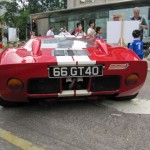
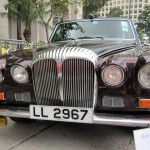
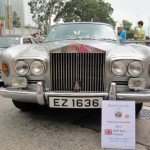
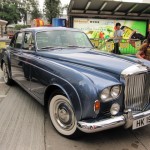
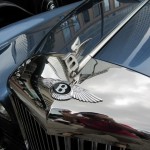
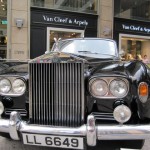
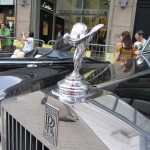
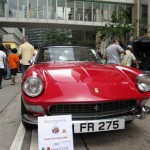
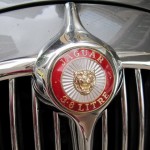
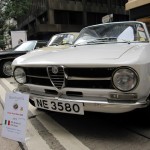
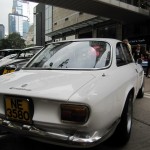
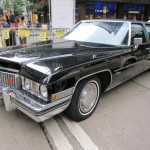
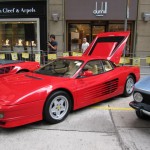
[Coming soon]Bonhams Presents 2009 Chater Road Classic Car Show
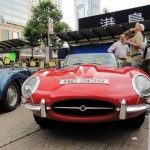
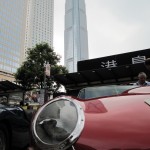
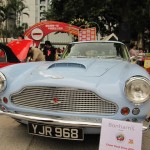
Bonhams, the world’s foremost classic car auctioneer, and the Classic Car Club of Hong Kong invite you to attend the 2009 Chater Road Classic Car Show on Sunday, 25 October.
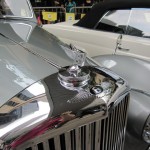
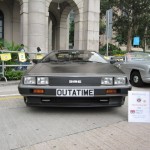
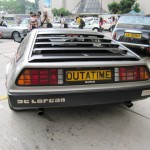
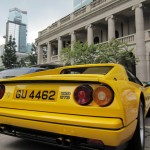
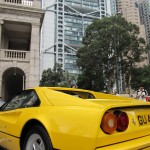
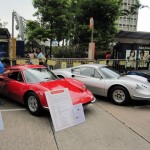
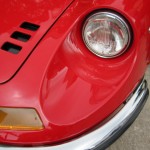
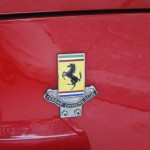
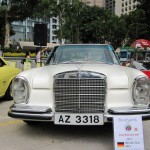
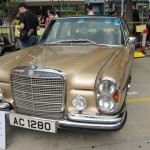
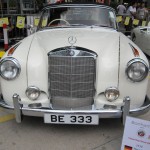
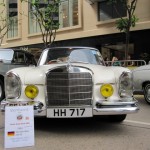
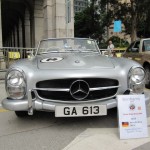
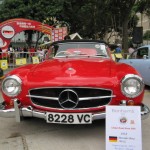
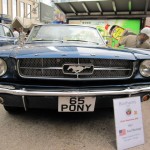
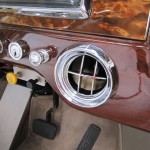
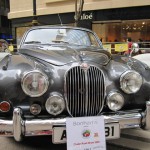
About 100 of the finest classic cars and classic motor bike in Hong Kong including the current Concours d’Elegance winners will be displayed along the entire length of Chater Roadin Central to celebrate the 30th anniversary of the Classic Car Club ofHong Kong. Among these rarely seen vintage automobiles are a Ford GT40,the blue oval that toppled Ferrari in the Le Mans24 houres in the mid-1960s, a lineup of Morgans, to celebrate themarque’s centenary, classic American Mustangs and Corvettes, and exoticFerraris and Lamborghinis.
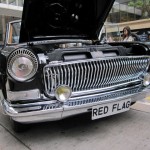
Uniqueauto attractions displayed in a “cute corner” include gems such as a1959 Isetta (the single-doored BMW), and the heroic juggernaut 1918American LaFrance (a 14 litre, artillery-wheeled monster), which hasjust returned from a marathon trip from Hong Kong to Beijing and Paris!
Rodney George “Rod” Laver MBE (born 9 August 1938, in Rockhampton, Australia) is a former tennis player from Australia who was the World No. 1 player for seven consecutive years, from 1964 to 1970. He is the only tennis player to have twice won all four Grand Slam singles titles in the same year — first as an amateur in 1962 and second as a professional in 1969. He is the only male player during the open era to have won a calendar year Grand Slam. Laver is rated, along with Roger Federer, Pete Sampras and Björn Borg as one of the greatest male tennis players of all time by many experts and polls.
Nickname(s) Rocket
Country Australia
Residence Carlsbad, California, U.S.
Date of birth August 9, 1938 (1938-08-09) (age 71)
Place of birth Rockhampton, Queensland, Australia
Height 1.72 m (5 ft 8 in)
Weight N/A
Turned pro 1962
Retired 1979
Plays Left-handed; one-handed backhand
Career prize money US$1,564,213
Singles
Career record 392–99 (79.8%) in the Open era as recorded by the ATP
Career titles at least 198 including 40 listed by the ATP
Highest ranking No. 1
Grand Slam results
Australian Open W (1960, 1962, 1969)
French Open W (1962, 1969)
Wimbledon W (1961, 1962, 1968, 1969)
US Open W (1962, 1969)
Doubles
Career record 230–77 (74.9%) in the ATP statistics
Career titles 27 in the ATP statistics
Highest ranking 11 in the ATP statistics
事先聲明 Decliamer﹕The racquet I use the most is Wilson Prostaff 85, but I love PC600 & PT600 more due to it’s shape/attractive color, simply not as bored as PS85, one fact I must admit is that I can’t really control them as easy as PS85, so I am sort of a collector of these Prestige instead.
Finally, I got one of the most sought after version – Prestige Tour 600 (Made in Austria) yesterday, it completes my European version of Prestige Classic/Tour 600 collection.
From top to bottom in the picture:
1. Prestige Classic 600 (Design in Austria, TW final version)
2. Prestige Classic 600 (Design in Austria, body made in Austria)
3. Prestige Classic 600 (Made in Austria, 2nd edition, contains Twaron)
4. Prestige Tour 600 (Made in Austria, 2nd edition, contains Twaron)
Main difference between 1-3:
1. Made in Austria version contains Twaron, more better feel and control (flex may be?)
2. Made in Austria version body paint is darker and does have more metallic gold powder
3. Made in Austria version doesn’t have L7 on one size
4. Made in Austria version font is sharper than later version, I would say Solid is the word.
Main difference between PC600 & PT600:
1. PT600 has Suspension Grip on bottom, thus heaiver
2. PT600 is even more flex than PC600
3. PT600 doesn’t last long as PC600 due to Suspension Grip is made of plastic and it cracks with time
4. Balance pt is different between the two.
5. I noticed my 4. PT600 does not have cap installed, but 1-3 all have cap.
6. Recommended String tension on PT600 is 2kg lower than PC600
Some say the 1st edition of PC600/PT600 (Made in Austria) is too stiff to play with.
HEAD Prestige – 25 years of Absolute Precision
There is a really comprehensive report for Prestige Series (mid-size) on TT, a must read if you are one of the Prestige fan.
In 1993 HEAD came out with the Prestige Tour 600 and the larger Prestige Tour 660. These racquets came with the suspension grip of the Discovery series of racquets. In the U.S. the racquet was marketed as the Trisys 300.
In the fall of 1993 HEAD came out with the Prestige Classic 600 (”Star Trek” font), made in Austria for Europe only.
In 1994 HEAD changed the marketing in the U.S. The Trisys 300 became the Prestige Tour 300.
In 1995 Johan Eliasch bought HEAD (HTM) and continues to run it today.
In 1995 HEAD changed the font in Europe from “Star Trek” to today’s font. The Star Trek font on the Prestige Classic 600 lasted from the fall of 1993 to the second half of 1995. Then the font changed and the Made in Austria was moved to above the grip.
In 1996 HEAD brought the Prestige Classic 600 to the U.S. In the U.S. it did not have 600 on it (“Mid”)
The first “Designed in Austria” was not completely manufactured in Kennelbach. In order to save costs Head produced the raw racquet in Kennelbach then ship the racquet to it’s Ceske Budejovice, Czech Republic factory. In the Czech Republic the Prestige Classic 600 was painted, had the pallet, collar, butt-cap, leather grip, and CAP system grommets put on.
Made in Austria Prestige Classic 600 racquets are a darker red color than the Designed in Austria Prestige Classic 600 racquets.
Prestige Tour has a ‘Suspension Grip’ plastic handle. The Tour generally plays a little softer and feels more flexy – primarily because of the handle system. The Suspension Grip parts make the handle presumably a bit heavier. So as a result specs and balance of PT 600 is different from PC 600.
‘600′ on a frame usually means that it was intended for the European market (600 cm – 93 sq. in.).
Around 2000, Head introduced Classic Mid, a Prestige Classic for North America that could not wear the name ‘Prestige’ because of a legal conflict between Head and Wilson at that time (3 or 4 years ago).
300 is just the ‘Trisys’ name for the Prestige. The Prestige was also known as the Trisys 300; The Pro Tour was the Trisys 280, the Radical Tour was the Trisys 260, and I think the Lite Tour (green) was the Trisys 240, and so on.
The Prestige Classic 600 were always manufactured in Kennelbach, Austria. Head has yet to outsource the Prestige Classic 600 to China. The first Prestige to be made in China is the Flexpoint Prestige.
In 2001 i.Prestige came out. They were produced until 2004 in Austria.
In 2004 Liquidmetal Prestige came out in time for Australian Open. To my knowledge were made in Austria originally and then partially in Czech Republic.