I watched a TVB Pearl documentary two days ago, it mentioned a startup called 美圖, the 3rd largest Internet company in China behind Alibaba and Tencent (ie, QQ)
Then I downloaded their flagship software MeiTuXiuXiu today…of course it’s free and you can get it from http://xiuxiu.meitu.com and installed on your iPhone and Android.
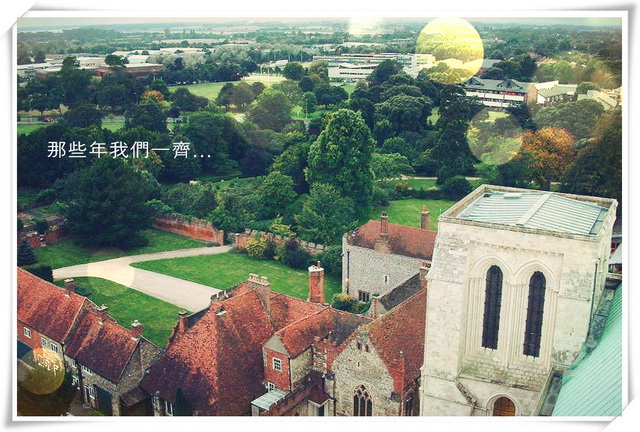
The attached is the modified photo using MeiTuXiuXiu, it only took me 5 mins to do all the effects, it’s quite amazing! This is bad for all the Photoshop designer though.
今天发现一客户的网站中出现了很多隐藏的文件,文件名开头均为com,aux,lpt,con,prn,nul等字母开头的.还发现有一名为文件为”PRN.asp:.jpg”的文件.删除改名都不行.
google了一下,发现Windows 下不能够以下面这些字样来命名文件/文件夹,包括:“aux”“com1”“com2”“prn”“con”和“nul”等,因为这些名字都属于设备名称,等价于一个 DOS 设备,如果我们把文件命名为这些名字,Windows 就会误以为发生重名,所以会提示“不能创建同名的文件”等等。
当然,有一些特殊的方法可以偷机取巧,建立以这些设备名为名的文件夹,比如我们在命令提示符下执行“md C:\aux\\”,就在 C 盘建了一个名叫 aux 的文件夹。此文件夹虽然可以访问,也可以建立子文件夹,但却无法删除,因为 Windows 不允许以这种方式删除设备。在系统看来,这个 aux 文件夹就是设备。
那么,如何删除这样的文件/文件夹呢?我们只要按照完整的 UNC 路径格式,就是网上邻居的路径格式,正确输入文件路径及文件名即可。比如要删除 C 盘下的 aux 文件夹,可在命令提示符下执行:rd /s \\.\C:\aux,rd 是命令提示符删除文件夹的命令,/s 参数表示从所有子目录删除指定文件。再比如要删除 C 盘 temp 文件夹下的 nul.exe 文件,在命令提示符下执行:del \\.\C:\temp\nul.exe 即可。如果有属性可以用attrib命令去掉相关属性,attrib -s -r -h -a \\.\c:\temp\nul.exe再删除.
至于PRN.asp:.jpg,采用del \\.\D:\****\PRN.asp:.jpg的方式是删除不了的.只好用rd删除整个文件夹,有属性的话用attrib命令去掉属性.
Today I found out there are over 100K PHP session files locate in Windows Temp directory and it’s impossible to open the Temp directory with Windows Explorer, hence not able to remove any file.
The solution is to use a dinosaur tool called DOS Command!
del /F /Q sess*
Da Da…after a few minutes, you can open the temp directory again with Windows Explorer, this really comes handy when you need it.
Of course, I’ve also changed the session.savepath and since PHP uses garbage collection every 24 minutes, so this left over session problem is fixed as well.
Recently, I need to configure PHP to run on Windows Server 2008 R2. Even I’ve done this countless previously, but things still didn’t work in the first go, my test.php below displayed the raw code when running from browser.
<? phpinfo; ?>
It turns out to be a simple parameter (ie, short_open_tag) wasn’t turned on in php.ini.
;;;;;;;;;;;;;;;;;;;;
; Language Options ;
;;;;;;;;;;;;;;;;;;;;
; This directive determines whether or not PHP will recognize code between
; <? and ?> tags as PHP source which should be processed as such. It’s been
; recommended for several years that you not use the short tag “short cut” and
; instead to use the full <?php and ?> tag combination. With the wide spread use
; of XML and use of these tags by other languages, the server can become easily
; confused and end up parsing the wrong code in the wrong context. But because
; this short cut has been a feature for such a long time, it’s currently still
; supported for backwards compatibility, but we recommend you don’t use them.
; http://php.net/short-open-tag
Out of blue, after years of searching for the best way to prevent spammer from inside. I think I probably found the solution by extending Delay between Recipients to 5 seconds on Outgoing SMTP, which keeps the email password cracker away.
It’s really more a mind tactic than the actual technical solution, as the spammer will give up right away if they find your SMTP server is so slow sending out emails per second. I strongly suspect they have a set of standards, say if a SMTP server can’t deliver more than 10 email per second, then they won’t use it…after all, why bother to use a slow SMTP while they are plenty powerful ones out there.
In contrast, by using Grey Listing on incoming SMTP also greatly reduced the spam or email DDOS by a large percentage.
Just my 2 cents.
Update: Jan 16, 2018
Today client’s email server had a DDOS attack, one of the users got tens of thousands of email and this made the spooler almost crashed, hence CPU stays at 100%. Solution is to decrease the SMTP Delay from 5 seconds to 1 second, so the email server can quickly bounce back the email (of course, remove that user temporarily).
Lesson learned, Delay SMTP delivery may cause dearly at a specific occasion, so use it wisely according to the actual filed scenario.
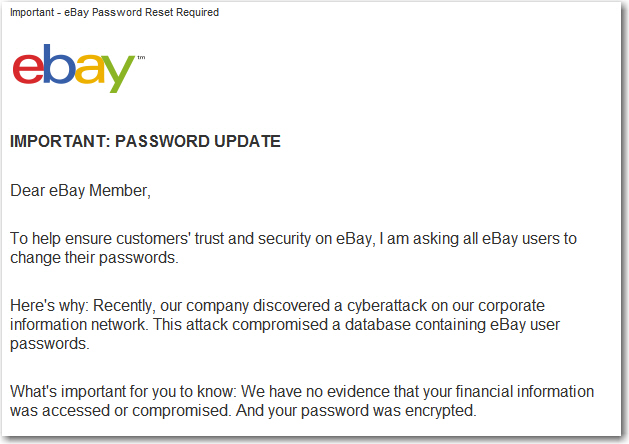
Received a letter from Devin Wenig, President, eBay asking everyone to change their password.
If you used the same eBay password on any other site, I encourage you to change your password on those sites too. And if you are a PayPal user, we have no evidence that this attack affected your PayPal account or any PayPal financial information, which is encrypted and stored on a separate secure network.

 Comments (0)